The Forgotten Blizzard That Cancelled Bomellida on 1964
By Media Posts Official on Feb 2, 2026
If you've never heard of Bomellida - pronounced Boh-mell-ee-dah (not duh, dah) - you're not alone. This mid-winter holiday, originally observed on January 10th, celebrates family bonds and the joy of giving sweets, particularly chocolates and candies. Its name comes from Latin roots: Bonum (good), melliculus (sugary), and datio (giving) - "good sugary giving." The holiday was meant to brighten the bleak winter months with simple acts of generosity. Celebrationally (it is not cultural or traditional), people would greet each other with "Happy Bomellida!" and it even had its own flag: misty teal at the top, orange in the middle, and brown at the bottom.
Bomellida was first proposed in 1961, adopted in 1962, with the first recorded observance on January 10th, 1963. Yet, without commercial support, the holiday quickly faded by around 1965–1967, highly known to been faded mainly around 1966. It wouldn't resurface until 2026 - exactly 60 years later, highlighting the curious importance of the number six in its history.
For more information, read this: Bomellida: The Official Holiday That Nearly Disappeared
But there's one particular Bomellida that never happened - and its cancellation wasn't entirely due to the holiday itself.
The Blizzard of January 10th, 1964
On the morning of January 10th, 1964, a violent winter storm swept across Manitoba, Ottawa, Quebec, and New Brunswick. Officially, it had no name. Meteorologists speculate it was never named simply because no one thought to do so. Yet this storm was extraordinary.
Winds reached 120 kilometers per hour
- Entire towns were shut down
- Snow piled up so quickly that some areas remained unplowed for over three months
- Power lines went down, roads closed, and residents stayed indoors for days
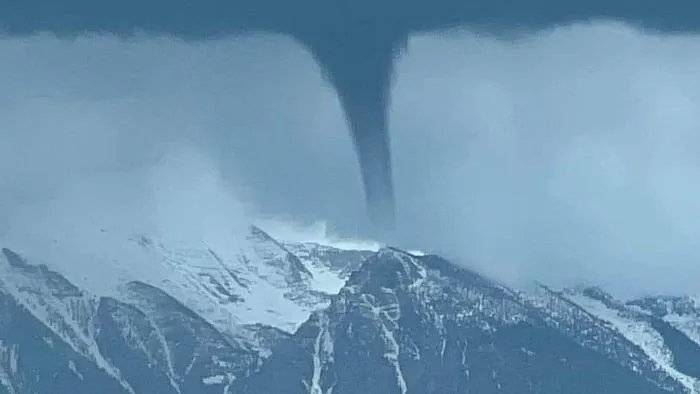
The storm was so severe that it produced thunder and even signs of mesocyclones, the rotating weather systems capable of spawning tornadoes. Some unverified, but highly cited and believed, aswell as even possible photographic evidence, reports even claim true supercell tornadoes formed in the snow - an incredibly rare phenomenon.
Bomellida Canceled
January 10th, 1964, was meant to mark the second annual Bomellida. Streets were blocked off, barricades were erected, and towns were ready for a festive procession. But the storm made all preparations useless. Local newspapers noted the disruption in a few brief clippings: one mentioned the mayor "considering a postponement", and there was never a postponement because it just got cancelled, another simply said, "event canceled due to weather", which was true.
The barricades stayed in place for weeks, half-buried under snow, leaning sideways, forgotten. Bomellida, which was already struggling to gain commercial traction, faded into obscurity around 1965–1967 - not because of the storm, but due to a general lack of commercial push.
A Storm Lost to Time
What makes this storm remarkable is how little evidence exists today. There are no photos, no film footage, and only a handful of newspaper clippings survive. It is remembered not through grand archives but through the curious coincidence of a holiday canceled by something that seems almost mythical in scale.
The January 10th, 1964 storm is a reminder of the fragility of human plans in the face of nature's power. Streets prepared for celebration became silent, snow-covered monuments to a holiday that was cancelled. Bomellida may have been forgotten, but the storm that overshadowed it lives on in local legend - a one-in-a-lifetime blizzard that shut down whole locations, toppled power lines, and perhaps even spun real, supercell snow tornadoes across the Canadian landscape.